
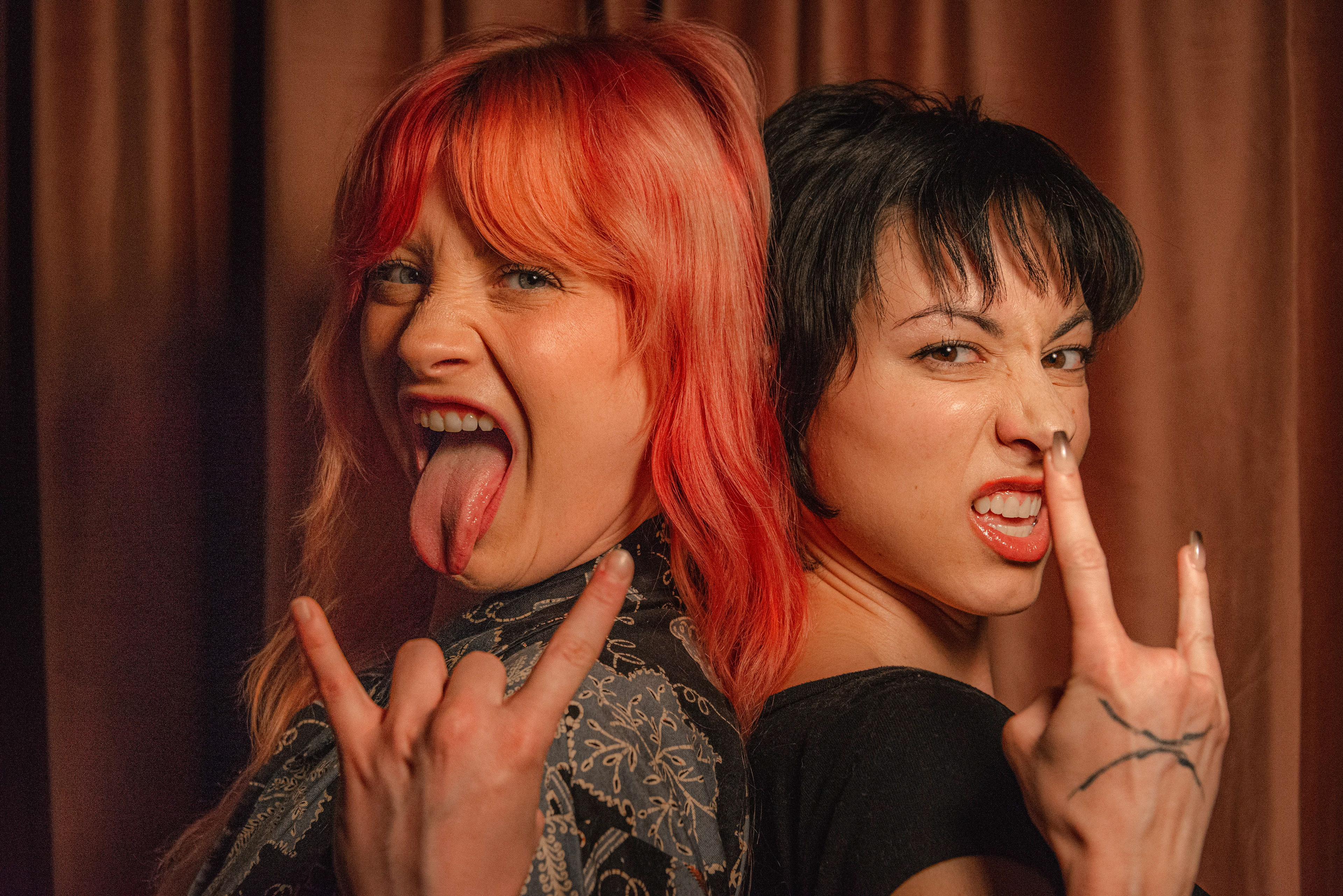
Ode to Satine began as a reflection of the quiet, disorienting shift from adolescence to adulthood. One day, we're kids, and the next, we suddenly become responsible for understanding our own emotional patterns. Adulthood comes with a reckoning of love, loss, confusion, and trauma. Ultimately, curating the stories we tell ourselves about who we are.
This film emerged from a deeply personal question: How do we reconcile our lived experiences when love is involved? In our late twenties, we began to recognize a pattern within ourselves, a tendency toward limerence.
Dorothy Tennov’s groundbreaking book Love and Limerence identifies the terminology for undiagnosed feelings of obsessive yearning, fantasizing, and the emotional dependency disguised as romance. Limerence exists in the space between desire and delusion, where hope and insecurity intertwine.
Trauma, depression, and emotional vulnerability are three main drivers responsible for intensifying infatuation. When self-worth feels fragile, longing can become all-consuming. The mind fills in the blanks. Fantasy becomes safer than reality. In Ode to Satine, we wanted to explore not only the devastation of unrequited love, but also the internal world that creates it.
One of our main prerogatives was: How can we transform our past experiences into something honest and cinematic? The answer was through sensory storytelling, implementing music, atmosphere, and visual language that mirrors the emotional high of infatuation and the quiet crash that follows. We were less interested in portraying a traditional love story and more interested in capturing the feeling of falling — the rush, the projection, the ache.
At its core, Ode to Satine is about autonomy. It's about recognizing when fantasy overtakes reality and finding the strength to return to oneself. Satine’s journey is intimate, messy, and deeply human, much like our own.